How Do We Save Santa Monica?
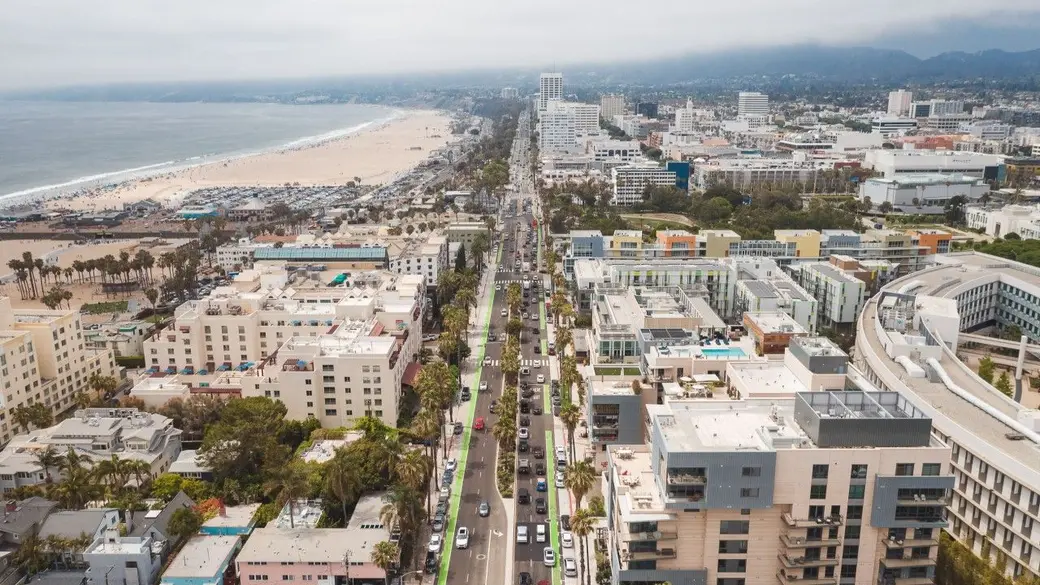
A real estate and business plan for rebuilding confidence, starting with Third Street Promenade
Santa Monica does not have a location problem. It has the beach, the Pier, oceanfront real estate, hotels, walkability, tourism, architectural character, affluent residents, and one of the strongest city brands in Southern California. But Santa Monica does have an experience problem. I say that as someone who has spent more than a decade working in Santa Monica real estate. In Santa Monica, value is never just about the beach. It is about the experience around the property: the streets, restaurants, retail, safety, walkability, and the confidence people feel when deciding whether to live, lease, buy, visit, or invest.
Third Street Promenade matters because it is not just a shopping street. It is one of the clearest signals of whether Santa Monica still works as a place. When the Promenade feels active, clean, safe, curated, and useful, Santa Monica feels alive. When it feels vacant, uncomfortable, or generic, the weakness spreads beyond retail. It affects restaurants, hotels, apartment desirability, condo buyer psychology, commercial rents, investor confidence, and the city’s overall real estate story.
The Wall Street Journal recently described Santa Monica as a premium coastal city under pressure, citing fiscal distress, major legal settlement liabilities, weaker tourism, fading retail, public safety concerns, and efforts to revive the local economy. Santa Monica is not “over.” But the city cannot coast on its brand. It has to rebuild the experience.
The problem: Third Street lost its ecosystem
Third Street Promenade used to work because several audiences overlapped at once: tourists, locals, office workers, moviegoers, shoppers, restaurant guests, beach visitors, hotel guests, and street performers. That overlap created energy.
Then the retail model changed. Malls weakened. Office patterns shifted. Tourism was disrupted. Public safety perceptions became part of the visitor experience. Santa Monica Place struggled. Rents and operating costs stayed high. The ecosystem broke.
So the fix cannot be “fill the vacancies.” Third Street needs to become less like an outdoor mall and more like a managed civic retail district: food, culture, daily services, events, safety, shade, local identity, clean public space, and reasons to linger.
Santa Monica has already started moving in this direction. In March 2026, the city approved economic revitalization tools to attract restaurants, expand entertainment zones, reduce barriers for businesses, create an economic development fund, and catalyze private investment. That is a start. But the fix has to be coordinated, not piecemeal.
1. Stop treating Third Street like a mall without a roof
National brands can be part of Third Street, but they cannot carry the district alone. The Promenade needs restaurants, cafés, bakeries, local retail, wellness, bookstores, design, art, family uses, cultural spaces, small grocers, pop-ups, and services people actually use.
A tourist should find something memorable. A resident should have a reason to return weekly. A worker should have lunch, coffee, errands, and after-work options. A family should feel comfortable spending an afternoon there.
The goal is not just foot traffic. The goal is repeat behavior.
2. Turn foot traffic into actual business
Downtown Santa Monica’s own data shows the Promenade recorded 346,147 visitors in March 2026, about 1.3 times March 2021 levels. That is encouraging. But traffic alone does not mean recovery. As of April 30, 2026, Downtown Santa Monica reported 75% ground-level commercial occupancy across the Promenade, with the 1200 block at 62%. That tells the real story: people may be walking through, but the district still has a leasing, tenant mix, and business-conversion problem.
The question is not only how many people come to Third Street. It is what they do once they get there: whether they stay, spend, dine, shop, meet friends, attend events, feel comfortable bringing children, feel safe after dark, and come back.
A healthy district does not just count people passing through. It converts foot traffic into habits, sales, leases, and confidence.
3. Reset the rent model
This is the hard part. If rents are still based on peak-era assumptions, the tenants who could revive the street may not survive. A high-vacancy district needs more flexible deal structures: graduated rent, percentage rent, shorter experimental leases, tenant-improvement support, and incentives for operators who create foot traffic.
This is where landlords have to be part of the recovery, not just beneficiaries of it. Vacant storefronts are not neutral. They weaken the whole street. They reduce confidence. They make good tenants more cautious. They make visitors wonder what happened.
The rent structure has to match the current market, not the memory of what Third Street used to be.
4. Curate the street block by block
Third Street needs to be curated like a property, not leased like a random collection of storefronts. Each block should have a purpose. One block may need food and evening energy. Another may need family-friendly uses. Another may need wellness and daily services. Another may need design, art, and local retail.
The questions for each block should be simple: Who is this for? Why would someone come here? Why would they stay? Why would they return? What makes this feel like Santa Monica?
Random leasing will not rebuild confidence. Curation might.
5. Fix the public realm before expecting people to linger
People do not linger where they feel uncomfortable. That does not mean hostile design. It means hospitality at the city scale: clean sidewalks, visible safety presence, mental-health outreach, lighting, bathrooms, seating, shade, landscaping, maintenance, wayfinding, and consistent management.
This matters for real estate because the public realm is part of the product. A condo buyer is not just buying square footage. A renter is not just leasing a unit. A restaurant is not just renting a storefront. They are buying into the experience of the place.
If the street experience feels weak, the property value story gets weaker too.
6. Program it constantly, but with quality
Third Street needs a rhythm beyond one-off events: design markets, food events, music, wellness mornings, children’s programming, art activations, outdoor cinema, literary events, local maker markets, and major-event programming.
Santa Monica’s World Cup activations are a useful proof of concept. The city created Golden Hour on Third Street Promenade with livestreams, live music, curated exhibitors, local vendors, and free watch parties on the 1300 block. After the first two weeks of activations, Santa Monica reported more than 100,000 attendees, an average 40 percent increase in Third Street Promenade foot traffic, and a 40 percent increase in downtown and beach parking revenues.
That proves people will come when there is a coordinated reason to gather. The challenge is turning event energy into everyday habits. People need reasons to come back.
7. Reconnect Third Street to the beach, Pier, hotels, Main Street, and Montana
Santa Monica’s assets are too strong to feel disconnected. The Pier is the postcard. Main Street is the neighborhood model. Montana is the local luxury village. The beach is the global draw. Third Street should be the front door.
A visitor should know how to move from hotel to Promenade to Pier to beach to dinner. A local should have a reason to choose Third Street over Main Street, Montana, Brentwood, Culver City, or The Grove. Right now, too many people experience Third Street as a place to pass through, not a place to spend time. That has to change.
8. Reset Santa Monica Place as part of the same ecosystem
Santa Monica Place cannot be treated as separate from Third Street. As of July 2026, Santa Monica Place should not be treated as ordinary retail churn. It is in a capital, leasing, and identity reset. A weak mall next to a struggling promenade drags down the entire district. The Real Deal reported in 2025 that Prism Places was brought in to manage Santa Monica Place after Macerich defaulted on a $300 million loan tied to the property. That is not a small retail problem. It is a reset moment.
Santa Monica Place needs to become an anchor again, but probably not by pretending the old mall model is coming back exactly as it was. The reset should focus on uses that give people a reason to come, stay, and return: food, entertainment, wellness, family uses, cultural space, hotel-serving amenities, creative workspace, education, and daily services.
Any larger redevelopment, including residential or hotel use, would require a separate feasibility, zoning, ownership, financing, and community process. The immediate point is simpler: Santa Monica Place has to become useful again. The Promenade and Santa Monica Place should be planned as one ecosystem.
Who has to do it?
No one actor can save Third Street alone. The city has to set the conditions: permitting, safety, sanitation, outreach, zoning, entertainment rules, public space, and incentives. Downtown Santa Monica, Inc. should be the day-to-day district manager: programming, marketing, data, cleaning, business support, and visitor experience.
Property owners and landlords have to reset the economics: rents, lease terms, tenant improvements, and coordinated leasing. Santa Monica Place ownership and management have to participate in the larger district strategy. Operators have to bring the reasons people return: restaurants, cafés, wellness, culture, services, family uses, and local retail.
Hotels, residents, tourism groups, nearby business districts, and property owners have to help reconnect the whole Santa Monica experience.
The financial reality is simple: not everyone can pay equally, but everyone has a stake in the fix. The practical path is not one giant bailout. It is coordinated investment by the parties whose value depends on downtown working: the city, Downtown Santa Monica, landlords, Santa Monica Place, operators, hotels, tourism partners, residents, and property owners. What Santa Monica cannot afford is a piecemeal approach where the city funds events, landlords hold out for old rents, and major properties operate separately from the district strategy.
Fatima’s Take
Santa Monica is not just a residential market, a tourist destination, or a retail district. It is an ecosystem. The value of a condo, apartment building, storefront, hotel, restaurant, or office space is tied to whether the city still feels livable, walkable, safe, memorable, and worth returning to.
That is why Third Street matters beyond retail. When the Promenade struggles, it affects confidence. When Santa Monica Place struggles, it affects confidence. When visitors do not linger, businesses feel it. When businesses close, residents feel it. When residents and visitors feel less connected to the city, real estate value becomes harder to explain.
Santa Monica still has extraordinary fundamentals. But fundamentals are not enough if the experience does not work. The fix is not nostalgia. It is curation. Third Street failed because it was treated like a retail asset after the retail model changed. It needs to be treated like a managed place: financially realistic, visually cared for, locally relevant, active, safe, and connected to the larger Santa Monica experience.
Saving Third Street is not just about saving stores. It is about rebuilding confidence in Santa Monica.
If You Are Making a Real Estate Decision
If you are deciding whether to sell, lease, hold, or reposition a property in Santa Monica or greater Los Angeles, the strategy matters before the listing does. I help clients analyze the market, curate the property, and position it with the design, data, and storytelling needed to move it.
This is Part 1 of my Santa Monica series in Market Moves. Next, I’ll look at what these changes mean for Santa Monica apartment buildings, rent-controlled assets, and residential real estate strategy.
Sources and Further Reading
Wall Street Journal, “On the California Coast, a Picture-Perfect City Falls on Hard Times”
City of Santa Monica, Economic Revitalization Strategy
City of Santa Monica, Activating Economic Opportunity and Growth
Downtown Santa Monica Data and Research
The Real Deal, Santa Monica Place Management Change
Santa Monica Daily Press, Economic Recovery Package
About Fatima Malik
Fatima Malik is an award-winning Los Angeles real estate advisor based in Beverly Hills and Los Feliz, serving sellers, buyers, investors, and property owners across Greater Los Angeles to the coast. With more than a decade of real estate experience, plus a professional background in interior design, architectural photography, financial analysis, and prior experience as an analyst at a global alternative investment management firm, she brings both market strategy and design intelligence to how properties are priced, positioned, presented, and negotiated. Fatima can be found at fatimamalik.com | DRE #01950831.